By Olivia Jakabosky
Whether you are sitting by Chocorua Lake or on your porch, birds are nearly impossible to ignore. You are bound to notice a robin rustling through leaf litter or a goldfinch flashing yellow in a nearby tree or perhaps the ethereal call of a hermit thrush in the evening woods. Because birds share our daily rhythms and are everywhere, birding has become one of nature’s most popular hobbies. For these reasons, it seemed like the obvious place for me to begin my naturalist journey.
For years, I bought the guides, downloaded the apps, and joined the walks. But after every outing, I realized something didn’t seem to click for me like it did for the other birders. Whether it was the bird names, mnemonic phrases for bird songs, or plumage, it never seemed to stick. I watched fellow birders light up at the sight of even the most common of species, like the gray catbird. Since I was an amateur birder, I assumed my passion for all things birds would come in time.
Then I went on my first butterfly outing and saw a silver-spotted skipper.
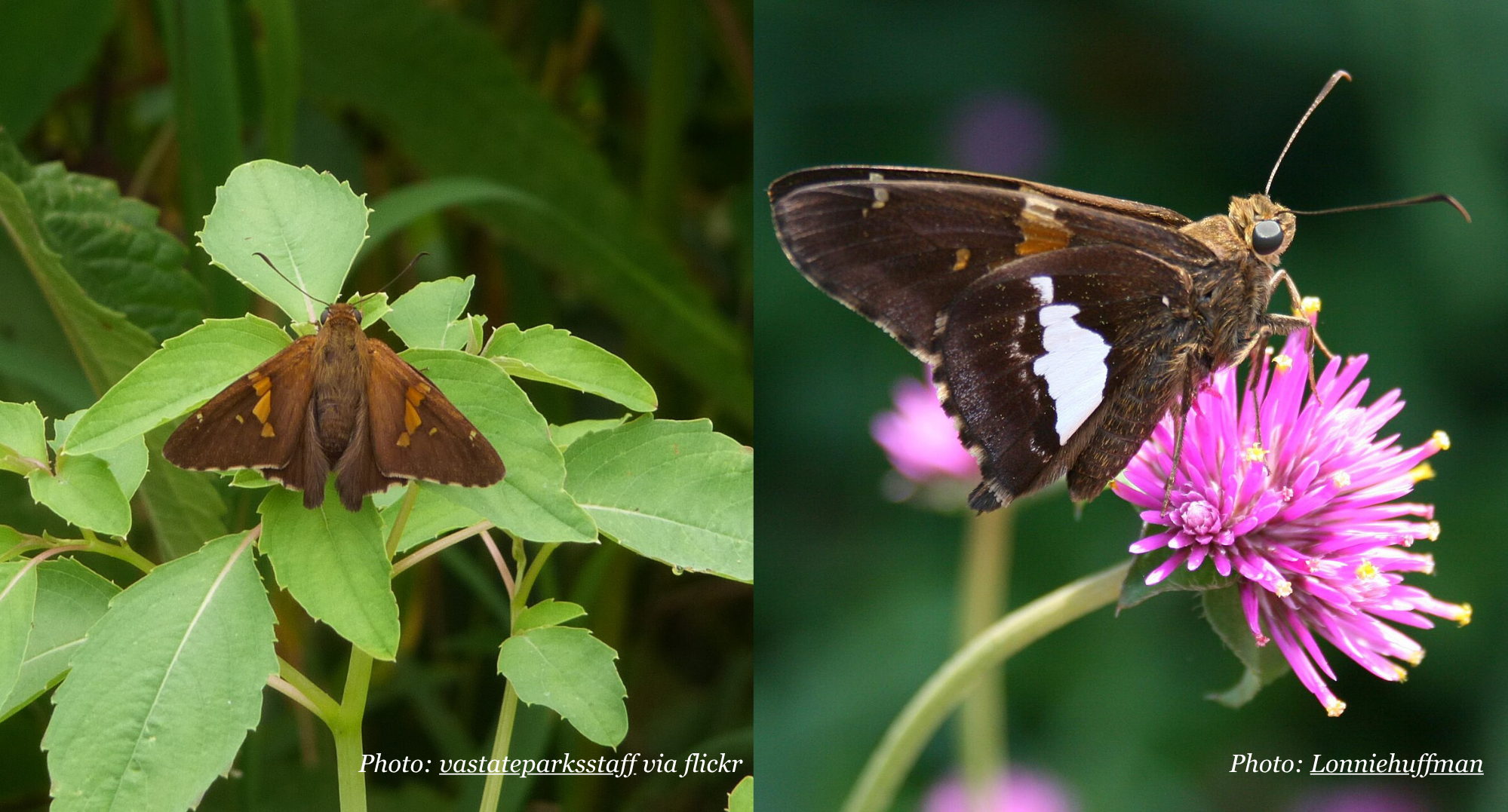
The silver-spotted skipper (Hesperia comma)
As their name suggests, skippers are fast flyers. They fly with a swift, bouncy, and perhaps even chaotic rhythm. In New England, the silver-spotted skipper can be found in north to central Vermont, New Hampshire and eastern Maine. At first glance, a skipper may appear like a moth. Some people often follow the rule that if the wings fold vertically upward, it is a butterfly; if the wings are held flat or tent-like, it is a moth. Skippers are small, fuzzy, and hold their wings partially folded at rest, making them easily a moth look-alike. While wing resting position can be a good indicator of a butterfly vs a moth, the most reliable method is looking at the antennas. A clubbed or bulb-like tipped antenna is a butterfly whereas no club or bulb is a moth.
Now, the silver-spotted skipper is comparable to the gray catbird–it’s common. But when I saw it, I felt the same thrill of the birders I never understood. Things that were once difficult for me in birding came naturally for me with butterflies: names, wing patterns, habitat, or even their distinctive flight styles. In that moment, I realized I hadn’t failed at birding, I simply was chasing the wrong pair of wings.
The summer season is the perfect time to begin butterfly watching as native plants attract butterflies of all stages of development, like the milkweed for a monarch butterfly. Visiting a healthy field or open meadow, cultivating a native garden, or providing a fruit feeding station for brush-footed butterflies are some of the best ways to see more butterflies in your area.
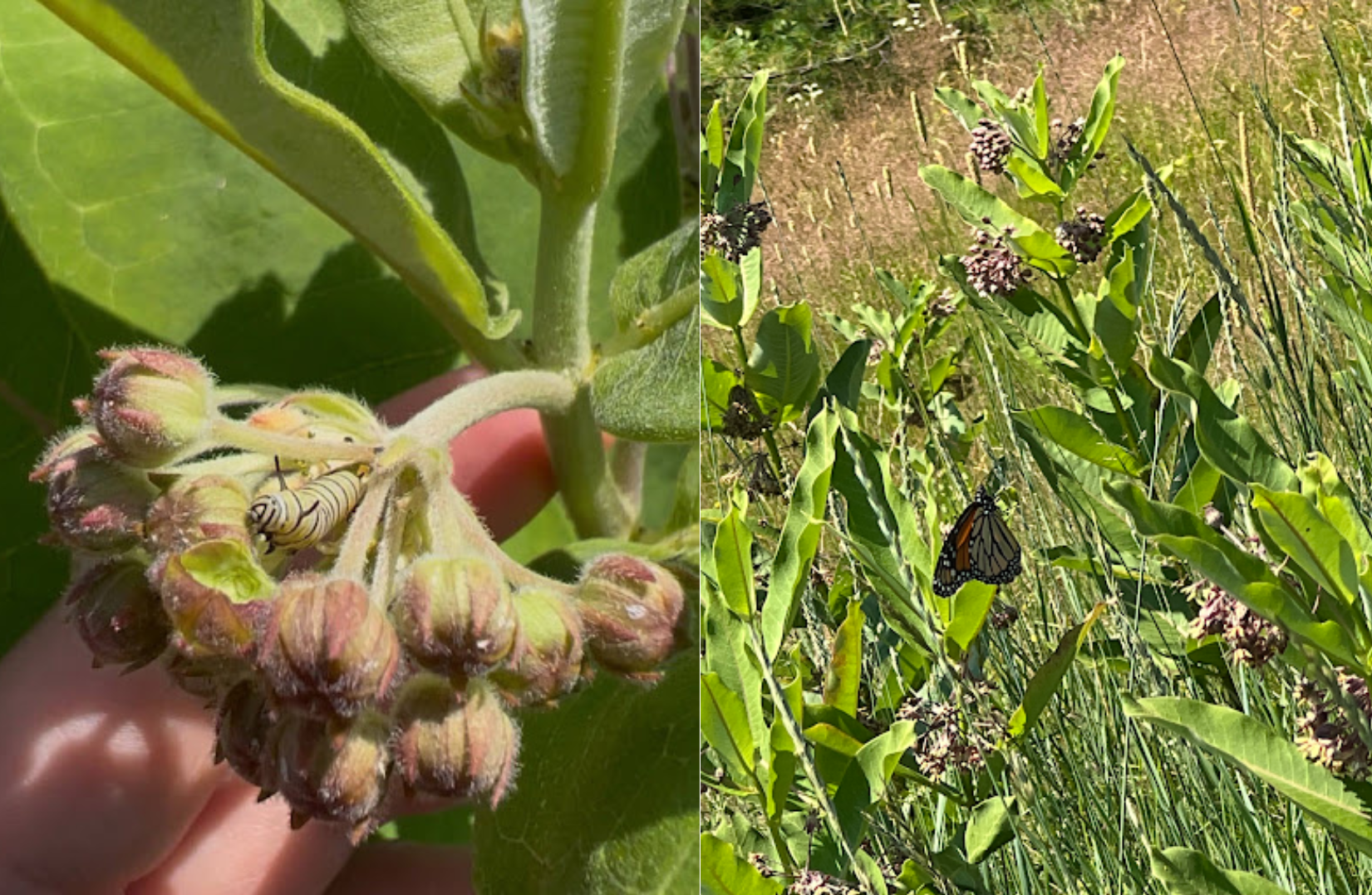
Monarch caterpillar and butterfly amongst milkweed in Sandwich, NH. | Olivia Jakabosky
Like wildflowers, butterflies emerge for just a moment in time. Like birds, butterflies make their presence known to you, if you’re willing to pause and spare a moment for their quieter display. For any struggling birders out there, keep spreading the love for birds, but perhaps spread that love for wings a little more and give butterflying a shot!
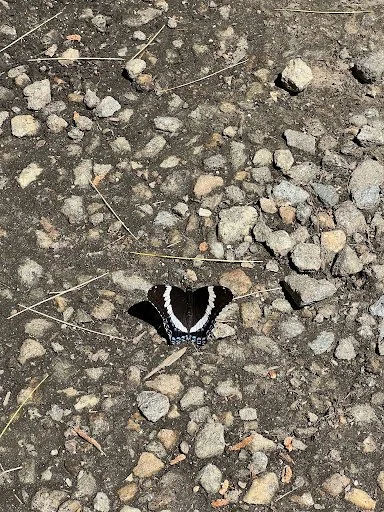
White Admiral butterfly at the Island at Chocorua Lake. | Olivia Jakabosky
Are you a budding lepidopterist? Check out these additional resources:
A Swift Guide to Butterflies of North America by Jeffrey Glassberg
Butterflies Through Binoculars (The East) by Jeffrey Glassberg
Olivia Jakabosky is CLC’s 2026 Land Steward through the Lakes Region Conservation Corps. Olivia has a B.S. degree in Conservation Biology and Ecology, with minors in Sociology & Global Studies from Montana State University, and an M.S. degree in Conservation and Biodiversity from the University of Exeter in England. This is Olivia’s first time living in New England, and she has quickly come to love the diverse insects, wildlife, and plants of this region.
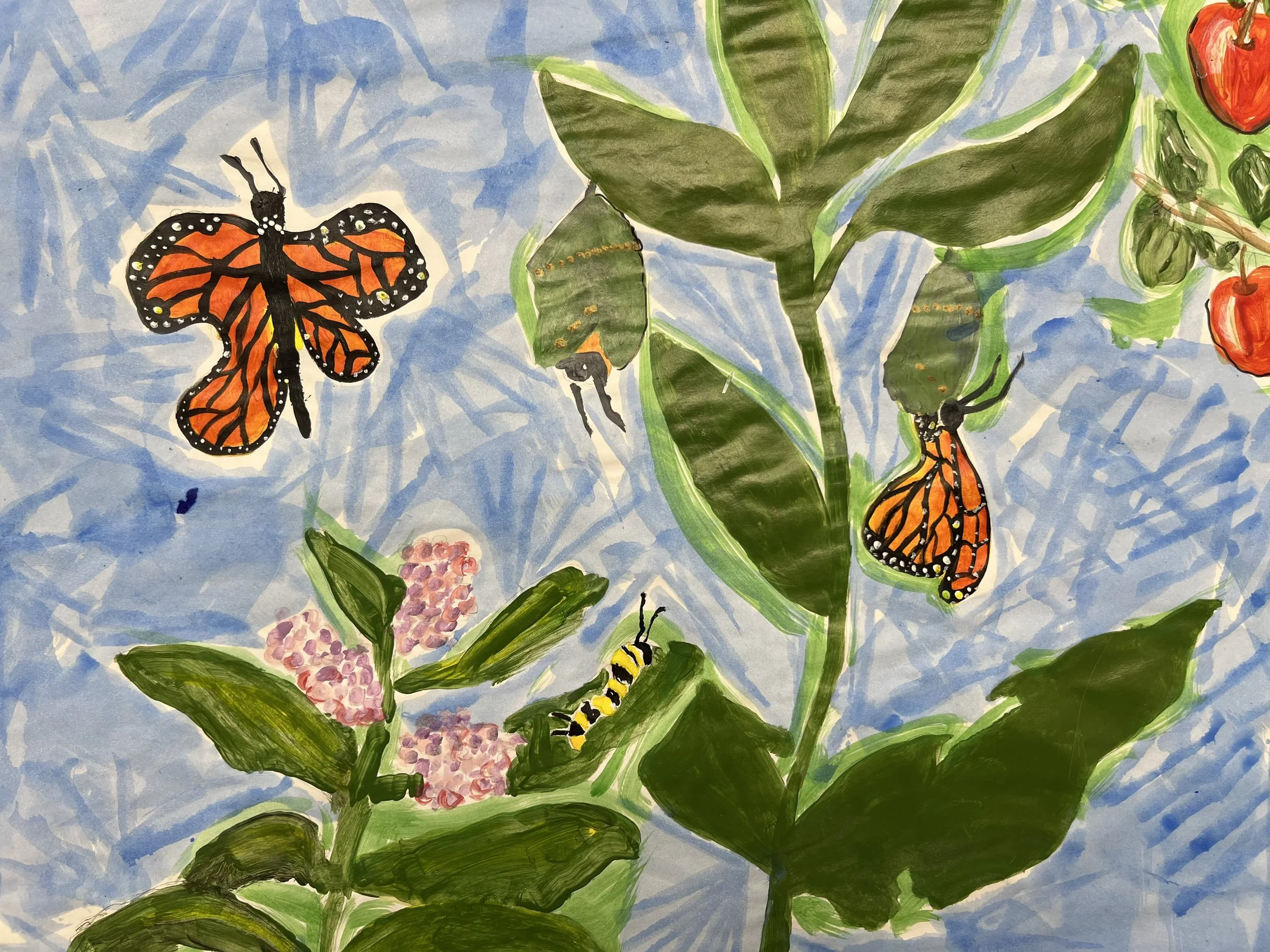
Banner Image: Monarch butterflies and caterpillars from the 2026 Pollinator & Plants crankie.