By Harper Walker-West
When you walk through the woods — particularly off trail — you may have noticed how squishy the ground is. This is called the duff layer of the forest soil, which is primarily layers of organic matter at different stages of decomposition. While the duff layer provides our soils much of their fertility, some tree species are looking for something deeper. For example, many pines, birches, and hemlocks prefer mineral soil for germination. We sometimes see these species germinating in areas that have been logged. This is especially true when the logging takes place without snow on the ground, as this can remove the duff and expose mineral soil. But what did these trees do before skidders found their way into the woods, or without the intervention of any human?
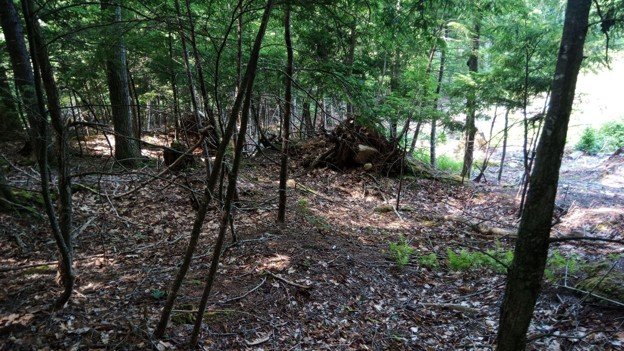
A mound in the Bowditch-Runnells State Forest created by the rootwad of a fallen tree. | Harper Walker-West
Pit-and-mound topography, or tip-up mounds, as pictured here at Bowditch-Runnells State Forest, is one of the natural ways that the duff can be removed and bare mineral soil exposed. These topographical features did, and do, play a key role in shaping many of the forested ecosystems that we see around here today. The tangled mass of roots, rocks, and soil of the fallen tree becomes the future mound. The “rootwad” provides exposed mineral soil and opens the canopy, providing more light and reducing competition from surrounding plants on the forest floor. In this region, three tree species in particular love to germinate on these tip-up mounds: hemlock, yellow birch, and sometimes paper birch. These species will also often germinate on old logs or stumps. When the logs or stumps decay, you can find the new trees “stilted” as they appear to stroll through the forest.
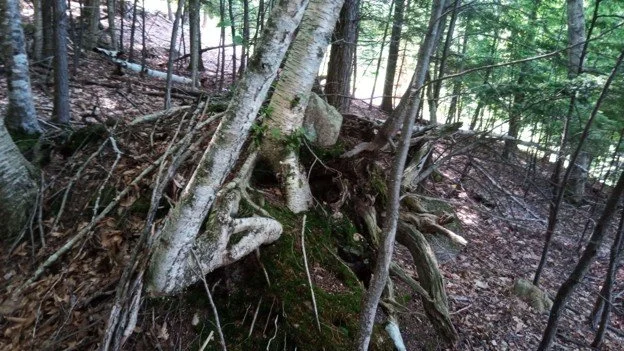
Yellow birch and hemlock growing from a tip-up mound, giving a stilted effect. Do you think it looks like they are walking? | Harper Walker-West
One of the greatest threats to this unique and crucial feature of the forest is salvage logging. When storms come through and knock trees down, folks often (logically) want to salvage the wood on the ground either for firewood or lumber. Unfortunately, when the trunk of a fallen tree severs from the rootwad, the rootwad frequently tips back upright, eliminating the potential for it to become part of pit-and-mound topography. So, next time you see a tree blow over, ask yourself if you can leave it where it is and cut a different tree for firewood.
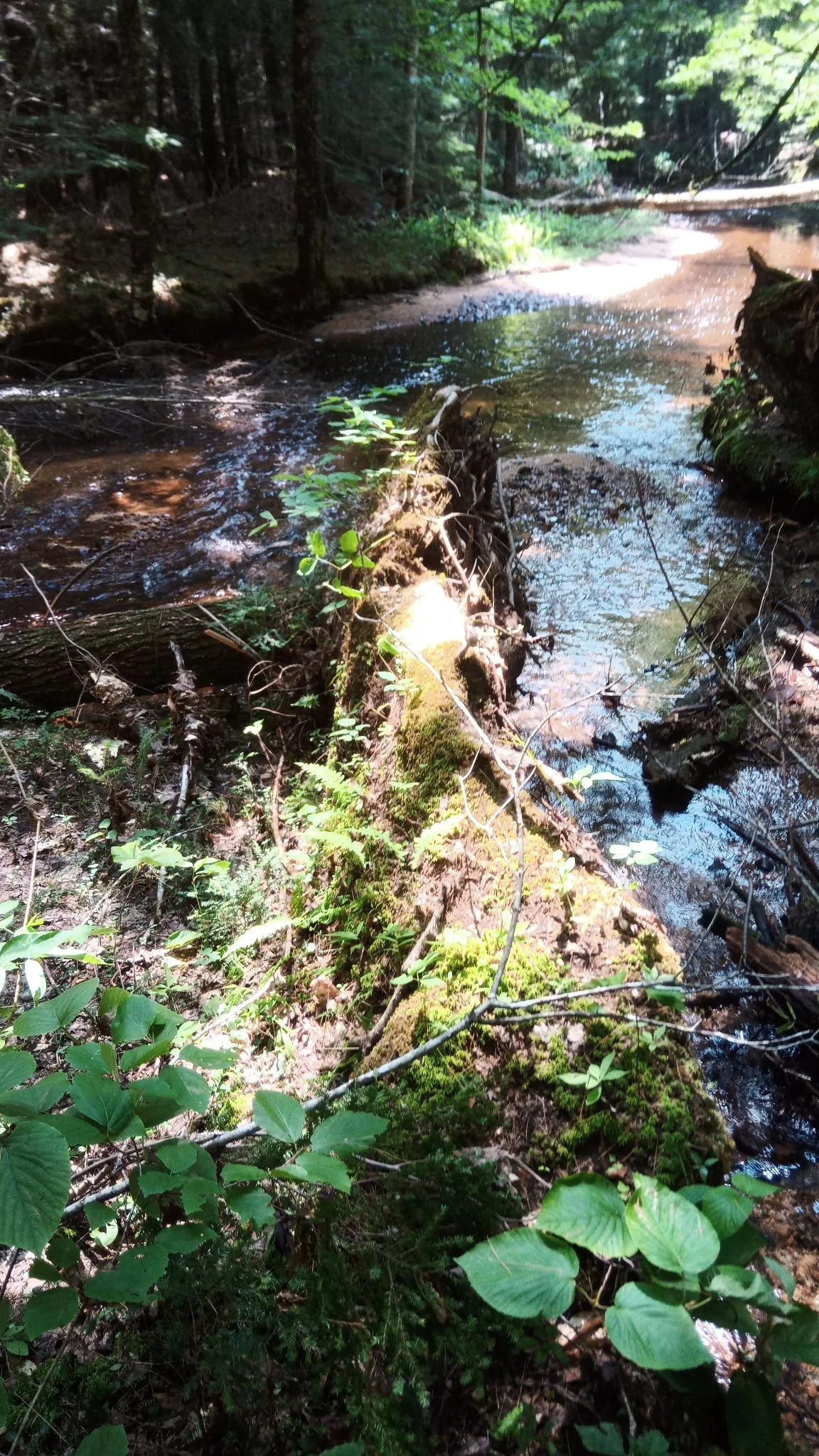
The “Before”: this image shows a decaying tree across a stream. As you can see, mosses, ferns, and saplings have already made their home on this log. | Harper Walker-West
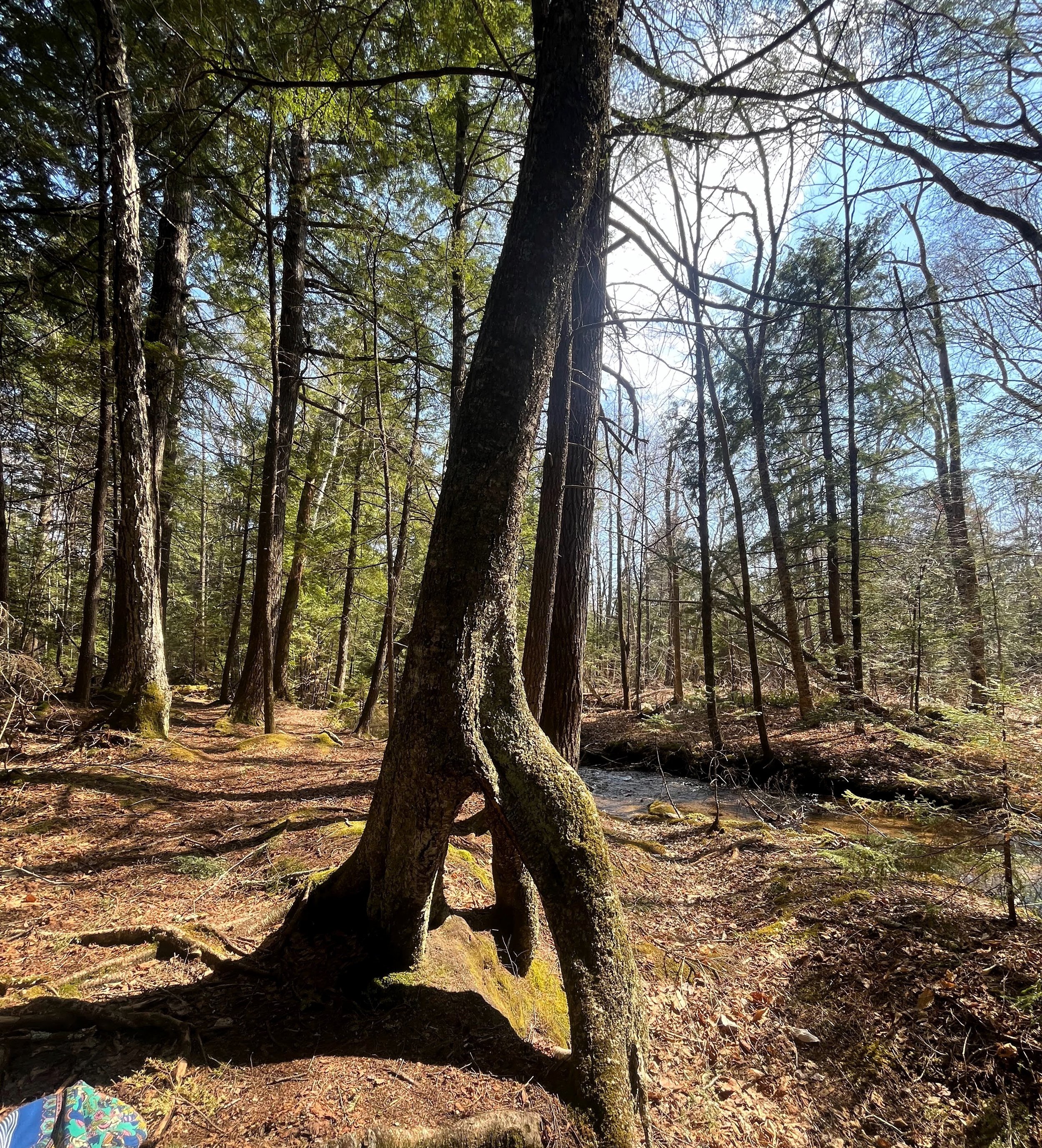
The “After”: this image shows a mature tree by a dried-up creek bed. The stilted formation of this tree shows that this tree started out growing on a fallen log, which subsequently decayed after the new tree had formed these “feet”. | Anna Paddock
Harper Walker-West is CLC’s 2026 AmeriCorps Outreach & Access Steward through the Lakes Region Conservation Corps. Harper holds a B.S. degree in Forestry with a specialization in forest hydrology from Southern Illinois University. Harper grew up in western Massachusetts and has a deep appreciation for this region and its forests.
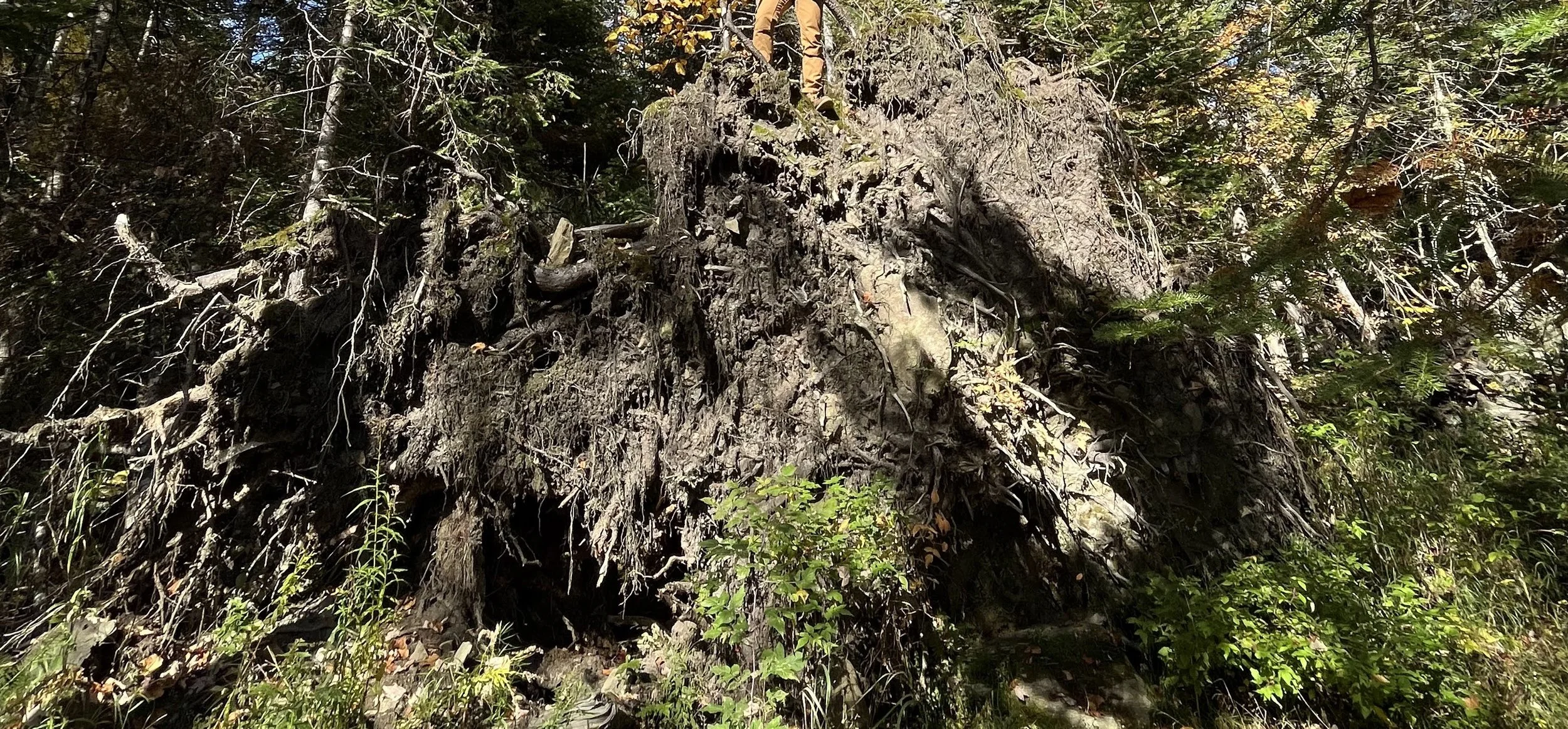
Banner Image: A huge rootwad from an even bigger tree, taken in Franconia Notch. | Anna Paddock